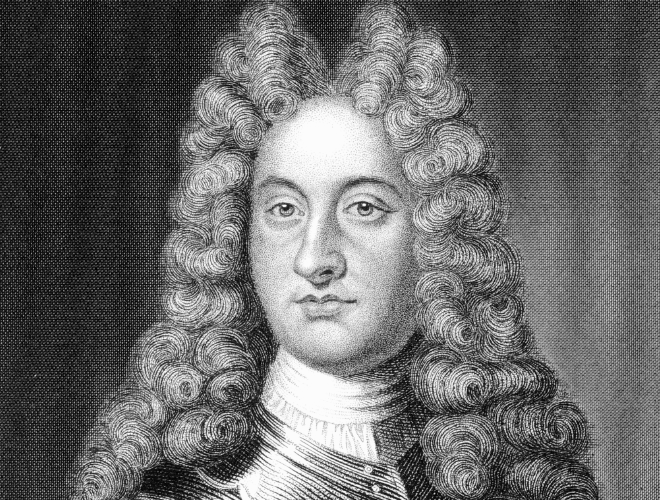
Bobbing John: Unpacking the Treacherous Legacy of the Earl of Mar
On a date like Mar-16, modern attention might be captivated by the latest cinematic releases, box office numbers, and emerging cultural trends. Yet, centuries ago, another "Mar" commanded the national stage, not with blockbuster hits, but with political maneuvering, shifting allegiances, and ultimately, a momentous rebellion that would forever brand him "Bobbing John." John Erskine, the 6th Earl of Mar, remains one of the most enigmatic and controversial figures in Scottish history. His story is a compelling study of ambition, opportunism, and the perilous path of a statesman caught between fading loyalties and the dawn of a new era.
Born in 1675 at Alloa Tower in Clackmannanshire, John Erskine inherited the Earldom of Mar at the tender age of fourteen upon his father's death in 1689. His education at the University of Edinburgh and Leiden prepared him for a life in politics, a world he would navigate with remarkable, if often self-serving, agility. Erskine's early career marked him as a staunch supporter of the post-Revolution establishment, aligning himself with the court party. He represented Clackmannanshire in the final Scottish Parliament, where he would play a pivotal role in a decision that would reshape the future of two nations.
The Shifting Sands of Allegiance: Who Was Bobbing John?
John Erskine earned his infamous moniker, "Bobbing John," due to his remarkable capacity for changing political allegiances. Far from being a steadfast ideologue, Mar was a political chameleon, expertly adapting his colours to suit the prevailing winds. His initial ascent saw him championing a cause that many Scots vehemently opposed: the Act of Union in 1707. Erskine was a key advocate for the Union, a move that merged the Kingdom of Scotland with the Kingdom of England to form Great Britain. For his efforts, he was richly rewarded, securing significant appointments under Queen Anne, including the esteemed position of Secretary of State for Scotland.
During this period, Mar was deeply embedded within the British establishment, seemingly thriving within the new political landscape. His career exemplified a pragmatic, albeit often cynical, approach to politics. He understood the intricate dance of power, the necessity of patronage, and the art of survival in a turbulent age. He was a master of self-preservation, always seemingly one step ahead of political rivals, aligning himself with whoever held the keys to influence and authority. Yet, this very adaptability would prove to be his undoing, forging a reputation for unreliability that overshadowed his undeniable strategic acumen. His willingness to compromise on Scottish sovereignty for personal gain would become a bitter point of contention for his future Jacobite allies.
The Defining Treachery: Leading the 1715 Jacobite Rising
Mar's political tightrope walk came crashing down with the death of Queen Anne in 1714 and the subsequent accession of George I from the House of Hanover. The new monarch had little trust in a man with such a fluid political history. Erskine was summarily dismissed from his office, a brutal blow to his status and ambitions. This dismissal proved to be the catalyst for his most dramatic and defining political shift. Stripped of his power and influence within the new Whig-dominated court, "Bobbing John" made a monumental turn towards Jacobitism.
On September 6, 1715, at Braemar, a mere year after his dismissal, Mar raised the standard for the Old Pretender, James Francis Edward Stuart, proclaiming him King James VIII of Scotland and III of England. This audacious act ignited the 1715 Jacobite Rising, a rebellion aimed at restoring the Stuart monarchy. Displaying surprising organizational skills, Mar rapidly assembled an army of approximately 10,000 men, primarily Highlanders drawn from clans loyal to the Stuart cause. He swiftly advanced to Perth, establishing a formidable base.
The culmination of his military efforts came on November 13, 1715, at the Battle of Sheriffmuir. Mar's Jacobite forces clashed with government troops led by the Duke of Argyll. The battle itself was a tactical stalemate; neither side could claim a decisive victory. While Mar’s left wing was routed, his right wing achieved significant success. However, the lack of a clear triumph allowed loyalist reinforcements to arrive, effectively undermining the rebellion's momentum and its chances of ultimate success. Following this inconclusive encounter and the eventual arrival of the Pretender, who brought little in the way of decisive leadership or military aid, the Rising faltered. Erskine, along with the Pretender, fled to France, leaving his followers to face the consequences. He was subsequently attainted, forfeiting his titles and estates, and lived out the remainder of his life in exile, a perpetual plotter yearning for a restoration that never came.
Echoes Through Time: Mar's Legacy and Modern Relevance
John Erskine, 6th Earl of Mar, left behind a legacy deeply scarred by charges of opportunism and treachery. His moniker "Bobbing John" cemented his image as a man devoid of firm principles, driven solely by self-interest. Yet, a deeper analysis reveals a more complex figure. Was he truly a traitor, or a pragmatist desperately navigating a period of profound political upheaval? His initial support for the Union could be seen as a realistic acceptance of the shifting power dynamics, a move to secure Scotland's place within a larger entity. His turn to Jacobitism, while undeniably self-serving in its timing, also reflects the desperation of a nobleman whose entire career had been built on royal favour, now suddenly stripped bare.
Mar's leadership of the '15 Rising, while ultimately unsuccessful, demonstrated an impressive ability to galvanize support and raise a substantial army. His failure stemmed not only from the strength of the government forces but also from his own tactical hesitations and the internal divisions within the Jacobite movement itself. His actions irrevocably altered the course of his family's history and had significant repercussions for the Jacobite cause, setting a precedent for future risings. He remains a figure who invites continuous debate: a symbol of aristocratic ambition, a tragic failure, or a calculated survivor in an age of shifting loyalties?
From Historical Treachery to Cinematic Triumphs: The Significance of Mar-16
The very notion of "Mar-16" becomes a fascinating lens through which to compare how different eras track "success" or "impact." While John Erskine, Earl of Mar, built his legacy through political maneuvering, strategic gambles, and ultimately, armed rebellion, our modern world celebrates and analyzes impact through different metrics. On a specific date like Mar-16, popular culture captures the public's imagination, and its "legacies" are measured in daily grosses and cumulative totals.
Consider the domestic box office for Mar-16, 2023. This snapshot in time reveals a vibrant cultural landscape, with films like
Scream VI topping the charts, earning $2,786,238 and bringing its cumulative gross to over $58 million in just seven days. Following closely were
Creed III, holding strong with $2,277,563 daily, and
65, securing third place. Even blockbusters like
Ant-Man and the Wasp: Quantumania continued to add to their impressive totals, reaching over $201 million. These figures represent the contemporary "battlegrounds" of public attention, a stark contrast to the battlefields where Mar sought to establish his legacy. For a deeper dive into these figures, read our article:
Mar 16, 2023 Box Office Breakdown: Scream VI's Week 1 & Creed III's Hold.
Fast forward to Mar-16, 2025, and the cinematic landscape promises new contenders and shifting fortunes. Data as of March 20, 2025, shows titles like
Mickey 17 leading the pack with a daily gross of $2,168,131, despite a notable drop from the previous day. New releases like
Novocaine and
Black Bag quickly established their presence, capturing significant daily grosses in their opening days. Meanwhile, established films like
Captain America: Brave New World and
Paddington in Peru continued their long runs, adding millions to their totals. This continuous evolution of popular taste and commercial success on dates like Mar-16 highlights how legacies are constantly being created, evaluated, and redefined. Comparing these two "Mar-16" snapshots reveals the dynamic nature of cultural consumption, much like the dynamic political landscape Mar himself navigated. Explore this further with our comparison piece:
Mar 16 Box Office: Comparing 2023's Scream VI Reign to 2025's Mickey 17.
Understanding these contemporary metrics helps us appreciate how historical figures like Bobbing John, despite operating in a vastly different world, also sought to capture and maintain their "gross" – their influence, their power, and their enduring place in the public consciousness. Whether through battle or box office, the pursuit of legacy remains a constant human endeavor.
In conclusion, John Erskine, the 6th Earl of Mar, "Bobbing John," remains a compelling and complex figure whose story illuminates the treacherous currents of 18th-century Scottish politics. His journey from an establishment favourite to a Jacobite rebel leader is a testament to the unpredictable nature of power and allegiance. While we may track the ephemeral successes of films on Mar-16, the enduring questions posed by Mar's life—questions of loyalty, ambition, and consequence—continue to resonate, inviting us to unpack the layers of a truly infamous legacy.